5 Ways Paper Engineers Are Driving Innovation Right Now
When people think about innovation, they don’t always think about paper.
But they should.
Because behind the packages on our doorsteps, the containers holding our food, and the materials replacing single-use plastics, there’s a quiet transformation happening driven by engineers working with one of the most versatile, renewable resources in the world: fiber.
At SPPF and SUNY ESF, we see that transformation up close. Our students aren’t just preparing for careers. They are preparing to step into an industry that is actively evolving, solving problems, and building more sustainable systems.
Here are five ways paper engineers are putting innovation into action today.
1. Replacing Plastics with Fiber-Based Solutions
Across industries, companies are rethinking packaging and fiber is leading the shift.
Paper engineers are developing materials that can replicate the strength, flexibility, and barrier properties of plastics while remaining recyclable and derived from renewable resources. From food packaging to e-commerce solutions, these innovations are helping reduce reliance on fossil-based materials without sacrificing performance.
This isn’t theoretical. It’s already happening and expanding quickly.
2. Advancing Sustainable Packaging Performance
Sustainability only works if materials perform.
That’s why so much of today’s progress is focused on improving how fiber-based packaging behaves in real-world conditions. This includes protecting products, extending shelf life, and maintaining durability across supply chains.
Recent conversations with industry professionals, including ESF alum Jake Finkelstein, highlighted how even small changes like innovations in starch can have a big impact on packaging performance and environmental outcomes.
Better materials mean less waste, fewer resources used, and more efficient systems overall.
3. Designing for Circularity from the Start
One of the biggest advantages of fiber-based products is that they are part of a cycle, not a straight line.
Corrugated packaging, for example, is widely recycled and reused to create new products, reducing the need for virgin materials while maintaining performance through a balance of recycled and fresh fiber inputs.
Paper engineers play a key role in designing products with this lifecycle in mind, ensuring materials can be recovered, reused, and reintegrated into production.
It’s not just about making something sustainable. It’s about making sustainability work at scale.
4. Improving Efficiency Across the Supply Chain
Innovation is not always about new materials. Sometimes, it is about using less.
Engineers in this field are constantly refining packaging design to reduce weight, eliminate excess material, and improve how products are shipped and stored. Even small efficiency gains can significantly reduce energy use and emissions across large distribution networks.
The result is packaging that does more with less.
5. Building Safer, Smarter Work Environments
Behind every product is a process and innovation extends to how that work gets done.
From advanced safety systems to better hazard recognition and training, today’s mills and manufacturing environments are continuously improving. These are not just operational upgrades. They are critical to ensuring that the people behind the work are supported and protected.
It is one more example of how progress in this industry is both technical and human.
Where Students Fit Into All of This
For students at ESF, this is not a distant future. It is a direct path forward.
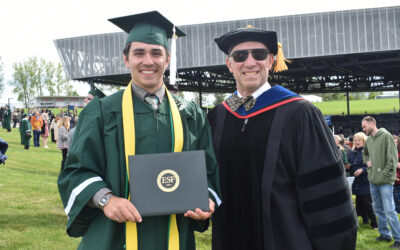
Through SPPF, students gain hands-on experience, industry exposure, and financial support that allows them to focus on building real skills. They graduate ready to contribute immediately, entering roles where they can make a measurable impact from day one.
As this industry continues to evolve, that readiness matters.
A Future Built on Fiber
The pulp and paper industry does not always get the spotlight when it comes to innovation.
But maybe that is because its impact is so embedded in everyday life, it is easy to overlook.
The truth is, this field is full of opportunity for problem-solvers, for engineers, and for anyone interested in building a more sustainable future.
For the students stepping into it now, that future is already taking shape.